SEC, Karl Fischer, MFI: Lab Triage for Lyophilized Cake Appearance
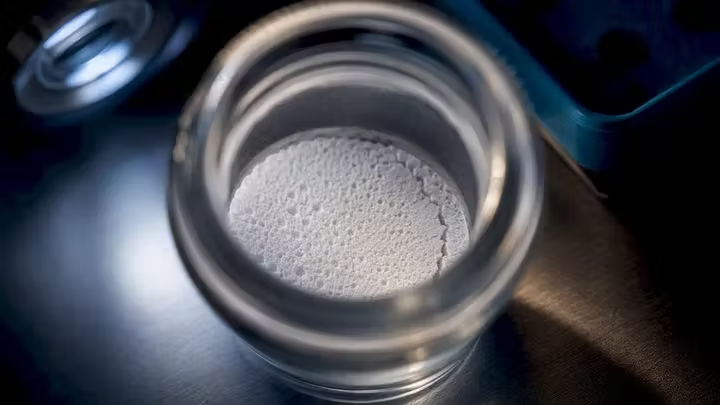
A less-than-perfect lyophilized cake appearance is often cosmetic, but a few specific signs (meltback, widespread collapse, or off-color discoloration) demand immediate analytical workup before you release or reject a batch. The first move isn’t a visual re-inspection; it’s triage with size-exclusion chromatography (SEC), Karl Fischer moisture analysis, and subvisible particle counts. Everything below explains how to tell which defects matter and which don’t.
TL;DR:
Widespread collapse, meltback, or discoloration in lyophilized cakes require immediate analysis, including moisture content and particle counts, before release.
Non-ideal appearance features like shrinkage or cracking often result from drying physics and do not necessarily indicate instability if orthogonal assays remain normal.
Root causes such as inadequate freeze margins or improper chamber pressure can be identified through resistance trends and process data, guiding targeted troubleshooting.
Advanced imaging methods can reveal internal structural issues invisible to visual inspection but are best used for root cause analysis rather than routine batch release.
Establishing predefined acceptance thresholds for moisture, aggregation, and particle counts allows rapid, objective batch disposition regardless of visual defect severity.
Table of Contents
Understanding Lyophilized Cake Appearance and Standard Terminology
When Appearance Tracks CQAs, and When It Doesn’t
Common Defects, Likely Causes, and What to Check Next
The Analytical Toolkit for Triage
What Advanced Imaging Adds (and Where It Falls Short)
Building Process and Formulation Controls That Prevent Bad Cakes
RapidCoreBio’s Lab Checklist for Cake Appearance Triage
Measurement Beats Cosmetic Judgment Every Time
Sources
FAQ
Understanding Lyophilized Cake Appearance and Standard Terminology
An “elegant” cake, the term used throughout the freeze-drying literature, is uniformly colored, occupies the full volume of the fill, and holds a rigid, intact structure with no visible separation from the vial wall. That’s the benchmark researchers compare every batch against, and it’s also the reason so much attention goes to lyophilized cake appearance during visual inspection. Real production runs rarely hit that benchmark on every vial, though, and the field has settled on a fairly consistent set of terms for the variants you’ll actually see.
The common non-ideal appearances include:
Shrinkage – the cake pulls inward from the vial wall but retains overall structure.
Partial collapse – localized loss of the porous matrix, often near the bottom or sides.
Full collapse – the entire cake structure loses porosity and appears glassy or shrunken.
Cracking – visible fissures through the cake surface or body.
Slanting – an uneven, tilted cake surface, usually from tray or shelf contact issues.
Meltback – localized liquefaction, typically near the top, from a loss of structural support during drying.
Product ejection – material blown out of the cake, sometimes onto the stopper or vial wall.
Dried product at the stopper – residue splashed or wicked above the fill line during processing.
Industry guidance groups these variants into severity tiers: cosmetic, minor, major, and critical, based on whether they plausibly touch a critical quality attribute (CQA). A PDA-backed framework recommends assigning severity by risk rather than by how a defect looks under bright light, which is the real shift happening across the industry right now.
When Appearance Tracks CQAs, and When It Doesn’t
Cake appearance correlates with critical quality attributes in specific, mechanistically explainable situations, not universally. Meltback and full collapse can trap unsublimated ice or unbound water within the matrix, which raises residual moisture and can slow reconstitution or promote long-term aggregation. That’s a real physical pathway, not a cosmetic coincidence.
But plenty of non-ideal cakes carry no such risk. Patel and colleagues documented cases where cosmetically flawed cakes, shrinkage and mild cracking among them, showed no measurable change in SEC profiles or subvisible particulate counts compared with elegant controls. The defect was a byproduct of drying physics (localized differences in vapor flow resistance), not a sign of chemical or physical instability.
Statistic Callout: The Patel et al. framework, now widely cited across the industry, treats appearance as one input among several, not a standalone release criterion, precisely because so many non-ideal cakes test clean on orthogonal assays.
Use these criteria to sort a defect fast:
Urgent analytical workup: widespread collapse, any meltback, discoloration, or defects affecting more than a small fraction of the batch.
Monitor and document: isolated shrinkage, minor cracking, or slanting confined to edge vials with no process deviation flagged.
Escalate regardless of extent: any yellow or brown discoloration, since that pattern often points to oxidation or pre-lyophilization degradation rather than drying physics, according to comparative peptide stability research.
Common Defects, Likely Causes, and What to Check Next
Matching a visual defect to its probable root cause saves you days of blind troubleshooting. Here’s the practical map researchers actually use at the bench.
Shrinkage or partial collapse. Usually traces back to an inadequate margin between product temperature and the formulation’s collapse temperature during primary drying. Watch resistance-to-vapor-flow (Rp) trends early in the cycle. A 2023 freezing-process study found Rp measured in the first hours of primary drying correlates with final cake structure closely enough to serve as a practical surrogate for shrinkage risk, especially in low-solid, high-fill formulations where heterogeneity is hardest to control.
Meltback and product ejection. These look similar but come from different failures. Meltback happens when the dried layer can’t support itself and localized liquid reappears, typically from shelf temperature excursions above the formulation’s collapse point. Product ejection is more mechanical, driven by chamber pressure spikes or aggressive shelf ramp rates that physically expel material. Chamber pressure logs and shelf temperature traces will usually separate the two.
Slanted cakes and dried product above the fill line. These point to physical handling, not thermodynamics: uneven shelf contact, tilted trays, or inconsistent vial loading patterns. Check the loading map and shelf leveling before touching the recipe.
Freezing-driven heterogeneity. Cooling rate and the absence of controlled nucleation are common upstream culprits. Fast, uncontrolled freezing produces small, disorganized ice crystals and an uneven pore network, which shows up later as inconsistent cake texture across a batch. Esfandiary and colleagues showed that annealing, holding the frozen product at an elevated sub-zero temperature for a defined period, can correct this heterogeneity, though it sometimes worsens surface appearance even as it improves internal uniformity.
The Analytical Toolkit for Triage
Standardized photographic records, taken under consistent lighting against a defined background, at least make defects traceable and comparable across lots.
Once a defect crosses into “urgent workup” territory, run assays in this rough priority order:
SEC to check for soluble aggregates or fragmentation.
Karl Fischer titration for residual moisture, the most direct read on whether the drying cycle actually finished.
Light obscuration or flow imaging (MFI) for subvisible particulates, particularly important if cracking or ejection introduced glass or stopper particulates.
Potency assay appropriate to the molecule, to rule out activity loss tied to aggregation or moisture.
Reconstitution time measurement, since collapsed or meltback cakes often reconstitute slower even when chemistry looks clean.
Pair those results with process data. Rp trends, shelf temperature history, and chamber pressure logs during the run in question tell you whether the defect was isolated or systemic, which shapes whether you’re looking at a batch disposition decision or a cycle redesign.
Pro Tip: Set your acceptance criteria before you see the defect, not after. Tie each visual category to a specific analytical threshold (say, residual moisture under a defined percent, no new SEC peaks above a defined percent) so a borderline cake doesn’t get a subjective pass or fail on inspection day.
What Advanced Imaging Adds (and Where It Falls Short)
Micro-CT and X-ray microscopy (XRM) let researchers see inside a cake without destroying it, mapping porosity, wall thickness, and internal heterogeneity in three dimensions. A 2018 imaging characterization study found these methods catch structural inconsistencies that routine visual inspection simply cannot see, since the defect may be entirely internal with a clean-looking exterior.
Laser scanning and scanning electron microscopy (SEM) complement micro-CT by capturing surface morphology and volumetric profile in fine detail, which is useful when you need to correlate outer shrinkage with inner pore structure.
Neither method comes free of caveats:
Beam hardening and reduced contrast at the cake periphery can cause micro-CT to underestimate shrinkage or fine cracking.
Quantitative imaging metrics should be validated against destructive cross-sectioning periodically, not trusted blind.
These tools add the most value during formal root-cause investigations or process development, not as a routine release check on every lot.
Building Process and Formulation Controls That Prevent Bad Cakes
Fixing appearance problems at the source almost always beats reformulating after the fact. Freezing gets the most attention because it’s the stage where structural heterogeneity actually originates.
Control the freeze, not just the endpoint. Controlled nucleation and a defined cooling rate produce more uniform ice crystal size across the batch, which translates directly into more consistent pore structure after sublimation.
Use annealing deliberately. Holding frozen product at an elevated sub-zero temperature increases crystallinity and reduces vial-to-vial inhomogeneity, a mechanism confirmed in freezing-process research on lyophilized formulations. Expect a possible tradeoff in surface elegance for a real gain in structural consistency.
Tune primary drying with Rp and DoE, not guesswork. Mapping shelf temperature against chamber pressure through a design-of-experiments approach, using Rp trends as your surrogate output, identifies a robust operating window before you commit to a production cycle.
Choose bulking agents with the defect in mind. Mannitol crystallizes and generally supports a more rigid cake structure; sucrose stays amorphous and is more prone to collapse near its glass transition temperature. The right choice depends on your formulation’s stability needs, not just appearance preference.
Fix the mechanical basics. Consistent shelf contact, even loading patterns, and controlled ramp rates during drying reduce slanting and product ejection, independent of any formulation change.
Pro Tip: If you’re working with a low-solid, high-fill formulation, don’t default straight to reformulation when shrinkage shows up. Freezing-process optimization resolves the majority of these cases without touching the excipient system, and it’s a faster path to a fix.
RapidCoreBio’s Lab Checklist for Cake Appearance Triage
When a cake looks off, work the checklist in order: document with a standardized photograph, run SEC, Karl Fischer, and MFI, compare against Rp and shelf temperature logs from that cycle, then decide on containment. Cross-check batch stability data and certificate of analysis records before final disposition. This overview is for laboratory research purposes only; Rapidcorebio’s peptides are research compounds, not for human or animal use, and any CQA concern should be confirmed with independent third-party testing.

Measurement Beats Cosmetic Judgment Every Time
Appearance is a signal, not a verdict. Treat it as the first data point in a chain that ends with SEC, moisture, and particulate data, not as the deciding factor on its own. The labs that write their acceptance criteria against analytical thresholds, before a defect ever shows up, make faster, more defensible disposition calls than the ones relying on eyeballing a vial under a light box.
— Adrian K. Solis
Sources
FAQ
What Is a Lyophilized Cake?
A lyophilized cake is the solid, porous structure left in a vial after freeze-drying removes water through sublimation. An elegant cake is uniformly colored, retains the fill volume, and holds together as an intact structure without slumping or cracking.
How Long Does It Take to Lyophilize a Product?
Cycle length varies widely depending on formulation, fill volume, and equipment, ranging from under a day to several days for complex biologics. Primary drying, the longest stage, is governed by shelf temperature, chamber pressure, and the product’s collapse temperature margin, so no single duration applies across formulations.
What Are the Three Stages of Lyophilization?
The three stages are freezing, primary drying, and secondary drying. Freezing converts the liquid formulation to a solid matrix with ice crystals; primary drying removes that ice through sublimation; and secondary drying removes remaining unbound water through desorption at higher shelf temperatures.
What Does “Lyophilized” Mean?
“Lyophilized” describes a product that has undergone freeze-drying, a process that removes water under vacuum while the material stays frozen, preserving structure and stability without heat-driven degradation. It’s the standard method for stabilizing many peptides for long-term storage compared with liquid formulations.
Recommended