Vial Seal Integrity: A Practical Guide for Peptide Researchers


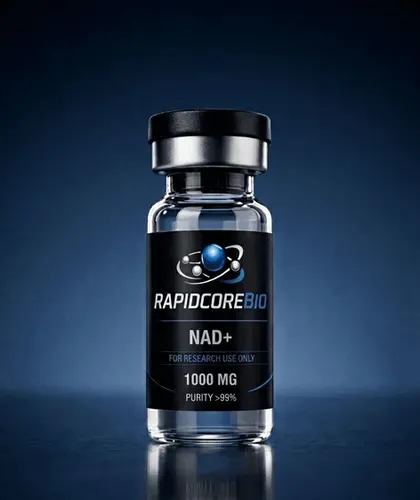

Vial seal integrity is the measurable ability of a sealed container-closure system (CCS) to maintain a sterile, contamination-free barrier throughout the product’s shelf life. If you’re handling research-grade peptides and suspect a seal issue, act immediately:
Quarantine the suspect vials and segregate them from your working stock.
Run an objective test — Residual Seal Force (RSF) measurement or a deterministic leak test per USP Chapter <1207> — before making any disposition decision.
Review storage history and the batch COA to identify whether a thermal or handling event could explain the breach.
Document chain of custody from receipt through the current finding.
Visual inspection alone cannot confirm seal integrity. Objective testing is required to detect invisible breaches that put your peptide samples and your data at risk.
Table of Contents
Why does vial seal integrity matter for peptide research?
How do vial seals actually fail?
What are the best objective tests for vial seal integrity?
How do you validate your capping equipment for consistent seals?
Which stopper and vial materials hold up under your storage conditions?
What should your QC checklist cover for research-grade peptides?
What should you do when you suspect a compromised vial?
How Rapidcorebio supports container-closure integrity
Key Takeaways
The case for treating seal integrity as a first-class research variable
Rapidcorebio’s verified peptides and COA access for your research
Authoritative references and further reading
Why does vial seal integrity matter for peptide research?
A compromised seal doesn’t just mean a leaky vial. For research-grade peptides, it means three compounding problems: loss of sterility, accelerated chemical degradation, and irreproducible experimental results.
Microbial ingress through even a microscopic breach can render a peptide sample biologically useless and introduce confounding variables.
Oxidative degradation follows headspace changes — once oxygen infiltrates, peptide oxidation begins, altering the compound’s activity profile.
Data integrity loss is the quieter casualty. A compromised sample that looks fine visually can produce results that are simply wrong, and you won’t know until the experiment fails to replicate.
Industry guidance from ISPE confirms that a holistic CCS qualification approach — covering component selection, capping process control, and deterministic testing — is required to maintain integrity across the full shelf life. Third-party COA verification, including HPLC and mass spectrometry data, adds a critical layer of confidence that the compound you received was sealed correctly and remains uncompromised.
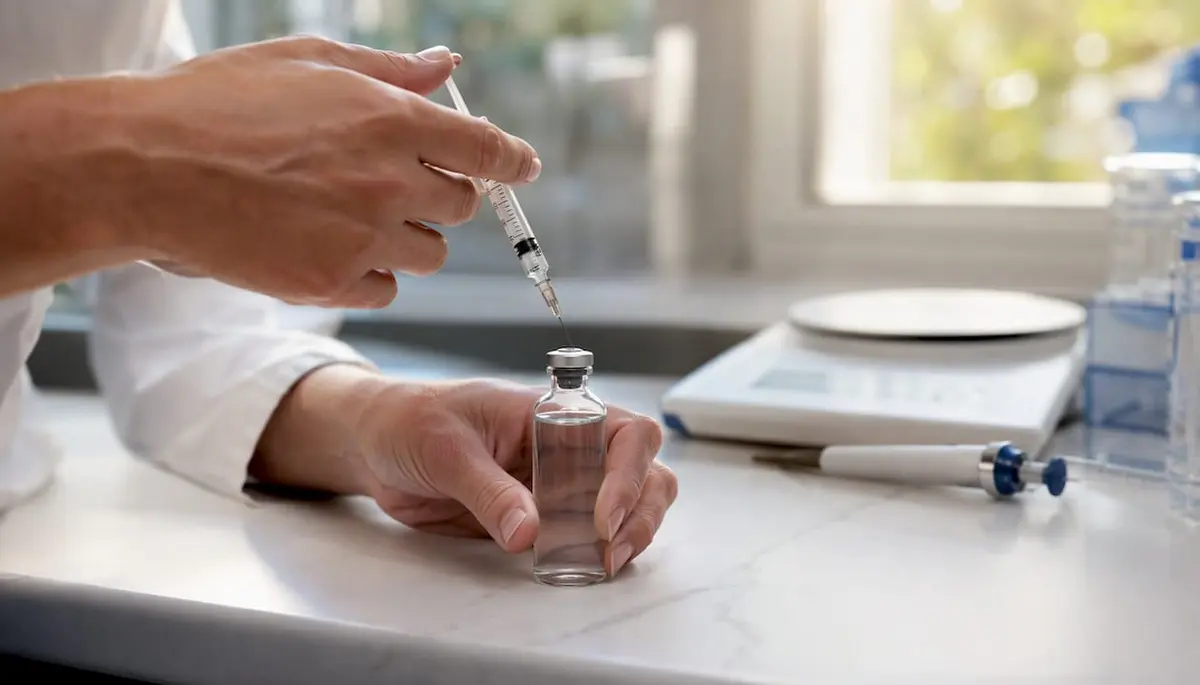
How do vial seals actually fail?
Seal failure rarely announces itself. Most failures stem from one of these root causes:
Inadequate stopper compression during capping — the most common process-level failure, producing insufficient RSF from day one.
Elastomer compression stress relaxation (CSR) — RSF decays exponentially over time as the stopper’s viscoelastic properties cause it to “relax” under sustained compression.
Material mismatch and thermal expansion differences — glass and elastomer expand and contract at different rates, creating gaps under thermal cycling.
Stopper tearing or deformation from over-crimping or incompatible vial/stopper geometry.
Aluminum seal corrosion from moisture exposure during storage.
Cryogenic storage effects — rubber stoppers can lose elastic properties near their glass transition temperature (Tg), temporarily compromising sealability at −80°C.
Environmental and process risk factors compound these mechanisms: capping equipment variability, improper dimensional stack-up between stopper and vial, handling shock during transport, and freeze-thaw cycling all accelerate failure.
Pro Tip: Never rely on visual inspection as your primary QC gate. A seal can look perfect and still fail a helium leak or vacuum decay test. Objective methods are not optional — they’re the only way to catch invisible breaches before they cost you an experiment.
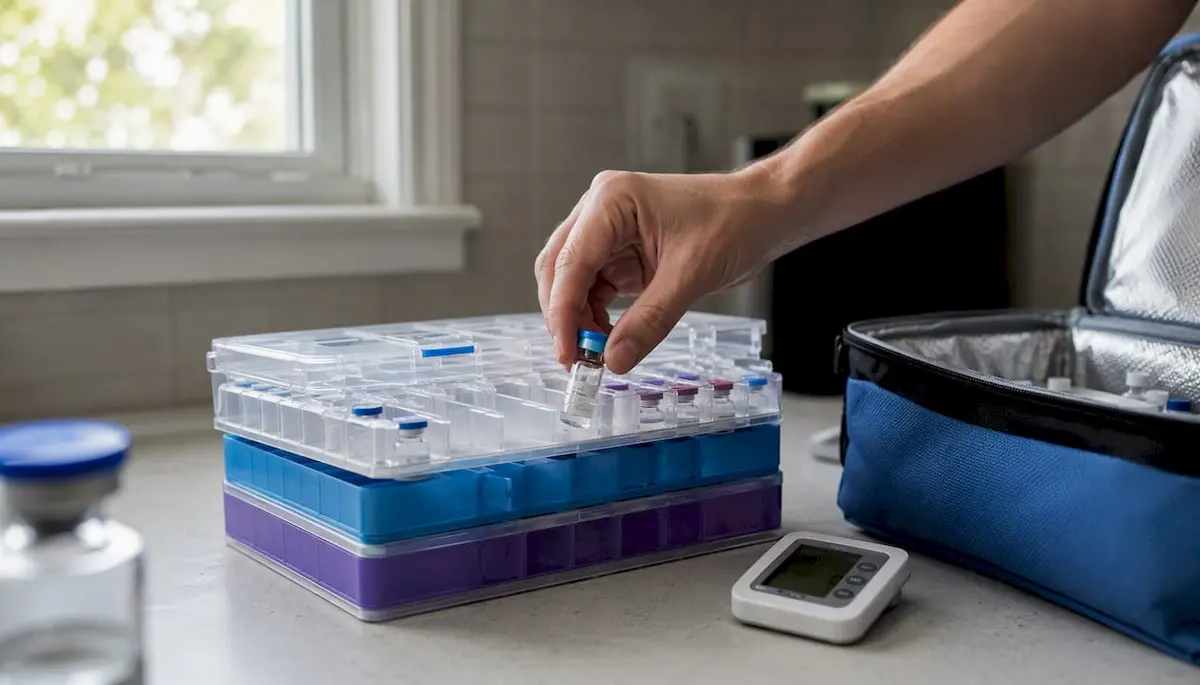
What are the best objective tests for vial seal integrity?
RSF measurement and deterministic leak tests provide the most reliable, objective evidence of container-closure integrity (CCI). Here’s how the main methods compare:
Method | Sensitivity | Destructive? | Equipment Needed | Best Use Case |
Residual Seal Force (RSF) | Moderate | Yes | RSF tester | Routine capping validation |
Helium leak detection | Very high | No | Helium mass spectrometer | CCI confirmation, investigative |
Vacuum/pressure decay | High | No | Decay instrument | Routine CCI screening |
Dye ingress | Low–moderate | Yes | Dye bath, microscopy | Low-cost preliminary screening |
Headspace O₂/CO₂ analysis | Moderate | No | Headspace analyzer | Frozen-storage correlation |
Computed tomography (CT) | High | No | CT scanner | Research characterization |
RSF measures the compressive force the stopper flange exerts against the vial flange. Studies show RSF can range from 7 N to 115 N depending on capping equipment settings — a spread wide enough to mean the difference between a reliable seal and a failure. RSF is practical for routine validation but is destructive and doesn’t directly measure a leak path.
Helium leak detection and vacuum decay are deterministic methods: they either detect a breach or they don’t, with no subjective interpretation. Both are suitable for non-subjective CCI verification, and headspace gas analysis correlates well with cold-storage breach events. Use helium or vacuum decay when you need confirmation, not just a process proxy.
Dye ingress is inexpensive and accessible but qualitative. It works for preliminary screening when you don’t have access to deterministic equipment, but it shouldn’t be your only method.
Headspace analysis shines for frozen-storage studies — measuring O₂ or CO₂ ingress over time gives you a direct read on whether cryogenic storage conditions are compromising your seals.
The practical combination for most research labs: use RSF as your routine onsite control metric, and deploy helium or vacuum decay periodically or when investigating a suspected breach.
How do you validate your capping equipment for consistent seals?
Capping equipment settings are not universal. Each line must be qualified for the specific vial, stopper, and cap combination in use — “standard” settings from another lab or a previous product are not transferable.
Characterize component dimensions. Measure actual vial neck OD, stopper flange OD and thickness, and aluminum seal dimensions across a representative sample. Don’t rely solely on nominal specs.
Run a dimensional stack-up analysis. A 5% difference in stopper compression can materially shift sealing performance. Map the compression window statistically before setting your capper.
Set target stopper compression percentage within the manufacturer’s recommended range, staying above the lower compression limit and below the maximum allowable load limit (MALL).
Measure RSF across a sample set at time zero and after a defined aging interval to capture early CSR decay.
Correlate RSF results with a deterministic leak test (helium or vacuum decay) to confirm that your RSF target actually predicts CCI.
Document acceptance criteria — minimum and maximum RSF values — and lock them into your SOP before routine production begins.
Pro Tip: If your peptides are stored at −80°C, validate your capping process at that temperature too. Perform cold-chain correlation studies that include worst-case dimensional tolerances and thermal-shrinkage effects, since deterministic CCI tests at target storage temperatures are the only way to confirm your seals hold under actual use conditions.
Which stopper and vial materials hold up under your storage conditions?
Elastomer formulation and stopper geometry drive time- and temperature-dependent RSF decay. Choose and qualify stoppers specifically for your storage conditions — not generically.
Common elastomer types include bromobutyl and chlorobutyl rubber, each with different CSR profiles, Tg values, and chemical compatibility characteristics. Bromobutyl is widely used for parenteral applications; chlorobutyl offers lower moisture vapor transmission.
Glass transition temperature (Tg) risk at −80°C: elastomer stoppers can temporarily lose elasticity near or below Tg, creating a window of compromised sealability during deep-cold storage. This is not a hypothetical — PDA case studies document Tg-related CCI failures in cryogenic applications.
Glass vs. cyclic olefin copolymer (COC) vials have different coefficients of thermal expansion. COC vials contract more than glass at cryogenic temperatures, which can alter the dimensional stack-up and affect RSF.
Procurement checklist for stoppers and vials:
Specification Item | What to Verify |
Elastomer type and formulation | Confirm compatibility with your peptide and solvent system |
Stopper dimensional tolerances | OD, flange thickness, and height within spec |
Recommended compression range | Supplier-stated minimum and maximum % compression |
Tg value | Confirm Tg is below your lowest storage temperature |
COA / compatibility data | Require extractables/leachables and dimensional data per lot |
Pair this with Rapidcorebio’s peptide stability and storage guidance when setting up your cold-chain protocol.
What should your QC checklist cover for research-grade peptides?
A short, reproducible QC checklist reduces risk and supports experimental reproducibility. Here’s a minimal SOP framework:
Incoming inspection: Check vials for visible defects (cracks, incomplete crimps, missing flip-offs). Log lot number, supplier, and receipt date.
COA verification: Confirm HPLC purity, mass spectrometry identity, and batch-specific results match the product label. Access batch COAs directly before use.
Lot sampling for RSF/leak testing: For routine receipt, test a minimum of 10 vials per lot for RSF. For suspected breach investigation, increase to 30 or more.
Storage condition check: Verify freezer temperature logs and confirm vials were stored within the validated range.
Periodic re-testing: Schedule RSF re-checks at defined intervals (e.g., every 6 months for long-term frozen storage) to capture CSR decay over time.
Documentation: Record all results in a lab log or LIMS with tester ID, date, method, and pass/fail determination.
Acceptance criteria: RSF values must fall within your validated minimum and maximum — typically spanning from about 7 N to 115 N, depending on your validated process. Any result outside that range triggers quarantine and confirmatory testing.
For physical protection during storage and transport, a hard-shell peptide case reduces handling shock that can stress seals between uses.
What should you do when you suspect a compromised vial?
Quarantine first, test second, document everything. Don’t use a suspect vial while you figure out what happened.
Isolate and label the suspect vial(s) immediately. Mark them “QUARANTINE — DO NOT USE” and segregate from working stock.
Log the finding: Record vial ID, lot number, storage location, discovery date, and the observation that triggered suspicion.
Review storage and handling history: Check freezer temperature logs, shipping records, and any handling events (drops, freeze-thaw cycles).
Run RSF and a deterministic leak or headspace test. If results are inconclusive, escalate to helium leak detection.
Disposition decision: Based on test results, choose retain (if tests pass), re-test (if borderline), or destroy (if confirmed breach).
Sample chain-of-custody record template:
All records should be retained in your LIMS or lab notebook for traceability.
How Rapidcorebio supports container-closure integrity
Rapidcorebio’s quality approach is built on the premise that a peptide’s value is only as good as the packaging protecting it. Every batch ships with batch-specific analytical verification — HPLC purity data and mass spectrometry confirmation — so you’re not guessing about what’s inside or how it was sealed.
Third-party COA access: Batch COAs are available directly through Rapidcorebio, giving you independent verification of purity and identity before you open a vial.
Packaging documentation: Rapidcorebio can address CCI-related questions about packaging specifications and storage recommendations through customer support.
Research-use-only policy: All Rapidcorebio peptides are supplied strictly for laboratory research purposes and are not intended for human or animal consumption.
For analytical verification methodology, Rapidcorebio’s purity vs. reliability resource explains why objective analytical testing matters more than label claims alone.
This article is general scientific information, not professional regulatory or medical advice. Confirm current testing requirements and compliance standards with a qualified professional or the relevant primary source for your specific application.
Key Takeaways
Reliable vial seal integrity requires objective testing, validated capping processes, and temperature-specific qualification — visual inspection alone will miss the failures that matter most.
Point | Details |
Objective testing is non-negotiable | RSF and deterministic leak tests detect invisible breaches that visual inspection misses entirely. |
RSF values can span from approximately 7 N to 115 N depending on capping equipment settings | Equipment must be validated per vial/stopper/cap combination; “standard” settings don’t transfer. |
Cryogenic storage adds Tg risk | Elastomer stoppers can lose elasticity near their glass transition temperature, compromising seals at −80°C. |
Quarantine first, test second | Suspect vials must be isolated and tested before any disposition decision — document every step. |
Rapidcorebio provides batch COAs | Every Rapidcorebio lot ships with HPLC and mass spectrometry verification for independent QC confirmation. |
The case for treating seal integrity as a first-class research variable
Most researchers treat vial seals as packaging, not data. That framing is where things go wrong. A seal failure doesn’t just lose you a sample — it can silently corrupt a dataset, because a partially compromised vial may still look intact while delivering a degraded or contaminated compound. The real cost isn’t the vial. It’s the experiment built on it.
What the literature makes clear is that seal performance is a system property, not a component property. The stopper alone doesn’t determine CCI. The vial alone doesn’t. The crimp alone doesn’t. It’s the dimensional relationship between all three, under the specific temperature and time conditions of your storage protocol, that determines whether your seal holds. That’s why labs that skip dimensional stack-up analysis and cryogenic correlation testing are, in effect, flying blind. They’re assuming their seals work because nothing has visibly failed yet.
The practical implication: treat RSF validation and deterministic CCI testing as standard operating procedure, not as something you do when a problem surfaces. By then, the problem has already affected your data.
Rapidcorebio’s verified peptides and COA access for your research
When your research depends on knowing exactly what’s in the vial and how it was packaged, Rapidcorebio delivers batch-specific HPLC and mass spectrometry data with every order — no guesswork, no mystery compounds.

Every Rapidcorebio peptide ships as a research-grade compound with full analytical documentation. You can review batch COAs before committing to a lot, and the research handbook covers testing terminology and methodology for researchers who want to go deeper on QC methods. Have a question about packaging specifications or CCI documentation for a specific product? Contact Rapidcorebio’s support team directly.
All products are for laboratory research use only and are not intended for human or animal consumption. Browse verified research peptides and access your COA documentation today.
Authoritative references and further reading
For full method details, regulatory framing, and protocol-level guidance, these are the sources worth bookmarking:
Methods and process guidance (start here):
Impact of Vial Capping on Residual Seal Force and Container Closure Integrity — PDA Journal; covers RSF ranges, capping equipment variability, and line-specific validation.
A Vial Container Closure System Performance Optimization Case Study Using Comprehensive Dimensional Stack-Up Analyses — PDA Journal; best source for dimensional stack-up methodology and compression window analysis.
Container Closure Integrity of Vial Primary Packaging Systems under Frozen Storage Conditions: A Case Study — PDA Journal; primary reference for cryogenic CCI, Tg effects, and headspace correlation.
A holistic science-based approach to container closure integrity for parenteral products: Lessons learned from a vaccine requiring deep cold storage — ScienceDirect; covers ultracold storage qualification using deterministic CCI correlated with RSF.
Regulatory and systematic framing:
Safeguarding Vial Container Closure Integrity: A Systematic Approach — ISPE Pharmaceutical Engineering; best overview of the holistic CCS qualification framework and the role of USP <1207>.
USP Chapter <1207> — the primary U.S. pharmacopeial standard for container-closure integrity testing of parenteral products; use this for regulatory framing and acceptance criteria language.
FDA Guidance for Industry: Container Closure Systems for Packaging Human Drugs and Biologics — foundational FDA document for CCS qualification requirements.
Recommended