Research-Use-Only Shipping and Returns Guide
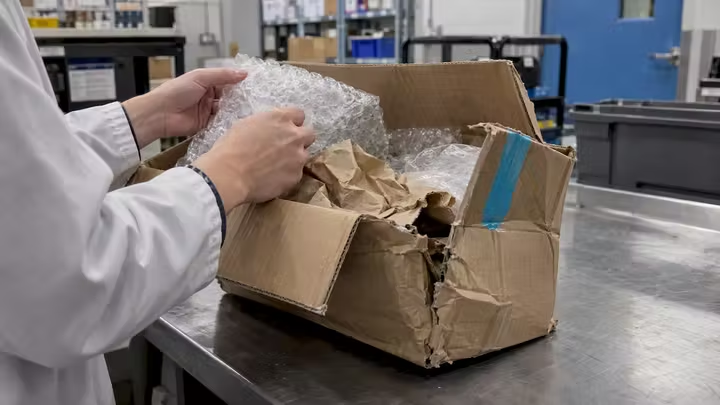
Shipping and returns on research-use-only (RUO) peptides work differently from ordinary online shopping. Packages are often sealed and temperature-sensitive, so many suppliers limit returns on them. The best protection is a short check before you order and a short routine when the box arrives. This guide covers both, in plain language.
One point first. Everything we discuss here is a research compound, sold for laboratory research only. These products are not for human or animal consumption, and nothing below is medical advice or a guide to using them.
TL;DR
“Research use only” is a labeling and intended-use term. It says nothing by itself about how well a package is shipped or whether you can return it.
Before ordering, look for a stated shipping timeline, a written damage and delay policy, and a clear returns page. If any of these are missing, treat that as information.
Temperature-controlled shipping is not automatically better. Whether it is needed depends on the specific peptide and on stability data, not on a blanket rule.
When a package arrives, photograph it, note the condition and date, and contact the seller quickly if something looks wrong.
Returns on sealed research products are often narrower than on consumer goods. Read the policy before you pay, not after a problem.
Table of Contents
Why shipping and returns matter more than the label
What the RUO label does not do
Before you order: a shipping checklist
Does a research peptide need cold shipping?
When the package arrives: a simple receiving routine
What to do if an order is delayed, damaged or missing
Returns on research-use-only products
Common mistakes buyers make
Our perspective
Where to start with RapidCore Bio
Research-use disclaimer
FAQ
Keep learning
Sources
Why shipping and returns matter more than the label
Most people searching this topic want one thing: to know what happens if an order goes wrong. That is a fair question, and the “RUO” label does not answer it.
The phrase has a regulatory history. In FDA rules, investigational drug shipments carry a specific caution statement, and 21 CFR 312.160 requires the wording that the contents are for investigational use in laboratory research animals or in vitro tests and are not for use in humans. That is a labeling rule, though. It does not tell you how fast an order ships, how it is packed, or whether a damaged vial is replaced.
The same rule puts duties on the shipper. Under that regulation, a shipper of research drugs must use due diligence to confirm the recipient is conducting bona fide research and must keep records of shipment date, quantity and recipient for two years. So a supplier that asks who you are and what you are ordering for is not being difficult. It is doing what the regulatory framework expects of a responsible shipper.
For a deeper look at the term itself, see our guide to what research use only means.

What the RUO label does not do
The label is not a shield, and it is not a promise. FDA has been clear that the words on a label are only part of the picture. In a February 2025 warning letter, the agency said that despite RUO and similar statements, website evidence showed certain products were intended for human use.
What does that mean for you as a customer?
A seller that treats RUO as a loophole is a risk to your order, because enforcement can interrupt its operations.
A seller that keeps its product pages, marketing and support answers consistent with research-only use is showing the right habits.
You are also responsible for how you use what you buy. Research use only means exactly that.
We built our own approach around that last point. Our product pages describe compounds as research materials, and we do not make human-use claims anywhere.
Before you order: a shipping checklist
Open the supplier’s shipping page and look for the items below. You do not need to be a scientist for this. You are checking that the business has thought about the same problems you will have.
1. A stated processing and delivery timeline
Look for a cutoff time for same-day dispatch, a typical transit time and the carrier used. Vague promises like “ships fast” tell you little.
There is also a legal baseline. The FTC’s Mail, Internet, or Telephone Order Merchandise Rule says sellers need a reasonable basis to expect they can ship within the advertised time, or within 30 days if none is stated. If a seller cannot ship in time, it must get your consent to the delay or refund the unshipped merchandise. Keep that in mind if an order sits without moving.
2. A plain description of packaging
Good pages say how products are packed: protective inner packaging, outer box, and whether any cooling element is used. You are not looking for a technical manual. You are looking for evidence that someone designed the package on purpose.
3. A policy for damaged, delayed or missing orders
This is the line between a supplier you can rely on and one you cannot. The page should say how soon to report a problem, what to send (usually photos and the order number) and what the supplier does in response: replace, refund or reship.
4. A tracking promise
You should receive a tracking number. If a supplier cannot give one, do not order.
5. Documentation that travels with the product
A published certificate of analysis (COA) for the batch is the document that shows what was tested. We publish COAs for every batch we ship, and you can compare what arrives against what is posted. For help reading these, our post on reading research-use-only product labels walks through the basics.
Does a research peptide need cold shipping?
This is the question that causes the most worry, and the honest answer is: it depends on the peptide.
Many buyers assume that anything without dry ice has been mishandled. That is not what the quality literature says. USP’s work on synthetic peptide reference standards states that shipping controls should be informed by stability studies rather than assumed to be universal. The same report shows how different peptides behave. In the cited data, gonadorelin lost less than 1% after 34 months at 45°C, while bivalirudin lost roughly 12% after 30 months at 45°C.
That is a wide spread. It means a blanket claim like “all peptides must ship frozen” is as unreliable as “none of them need care.”
The general principle comes from USP General Chapter <1079>: products should be stored and transported under predetermined, stability-supported conditions, and short excursions are acceptable only when data and technical justification show quality is unaffected. In plain terms, a good supplier knows what its products can tolerate and ships accordingly.

Why dry ice is not a simple upgrade
Dry ice sounds safer, but it brings its own rules. USPS Packaging Instruction 9A says domestic mail with dry ice needs packaging that lets carbon dioxide gas escape, and air mailpieces may contain no more than 5 pounds, with specific markings required. For air shipments in general, PHMSA notes that quantities above 5.5 pounds per package need extra marking, documentation and carrier arrangements.
That adds cost, complexity and transit restrictions. For a product that does not need it, dry ice is extra expense and extra handling with no benefit. For one that does, it is essential. The point is to match shipping to the product, which is why the supplier’s reasoning matters more than the method.
For storage questions after delivery, see our posts on peptide stability, storage and handling and peptide shelf life.
When the package arrives: a simple receiving routine
A two-minute routine protects you if you ever need to file a claim. You do not need special equipment.
Photograph the outer box before opening it. Capture the shipping label, any dents, tears or moisture.
Note the date and time of delivery. Write it down with your order number.
Open it and photograph the contents as packed. Take a picture before you move anything.
Compare the contents with your order confirmation. Check names, counts and any supplies you ordered, such as bacteriostatic water.
Check the seals and labels. Look for intact seals, legible labels and anything leaking or broken.
Match the paperwork. Confirm the batch information on the product matches the COA posted by the supplier.
Store as the supplier’s documentation says, and keep the packaging until you are sure everything is right.
If anything looks off, contact the supplier the same day. Most damage policies run on short windows, and photos taken at opening are your best evidence.
What to do if an order is delayed, damaged or missing
Delayed
Check tracking first. If the package is stuck, contact the supplier with your order number. If the seller did not ship within its stated time, the FTC rule above gives you a basis to ask for a refund of the unshipped order or to agree to a new date.
Damaged or warm on arrival
Do not guess about the condition of the product. Document it, stop, and contact the seller with your photos. Ask what the supplier’s own guidance is for that product. Because tolerance varies by peptide, a supplier that actually tested its shipping approach can answer specifically. One that cannot answer at all is telling you something.
Missing
If tracking shows delivery but you have no package, check with neighbors and your carrier first, then tell the supplier. Policies on missing parcels differ, so read the page before you order.
Returns on research-use-only products
Here is the part many customers do not expect. In the United States there is no general federal law giving you a right to return an item you simply changed your mind about. Return rights come mostly from the seller’s own policy, plus state law and consumer protection rules for defective or misdescribed goods.
Research products tend to have narrower policies for practical reasons. Once a sealed product has left the supplier’s control, no one can verify how it was stored. So the typical pattern, across the market, is this:
Wrong item or damaged on arrival: usually covered, if you report it quickly with photos.
Undelivered or lost: handled through the carrier and the seller under the order terms.
Change of mind: often not accepted, or accepted only for sealed, unopened items within a short window.
Opened products: usually not returnable.
Treat this as a general pattern, not a rule. Each supplier sets its own terms, and they change, so always read the current returns page. Sellers that handle investigational materials also may have duties around unused supplies. In the drug regulations, for instance, a sponsor must arrange for return or destruction of unused investigational supplies when an investigation ends. That is a regulatory duty in a formal setting, not a promise you can expect from a store.
Common mistakes buyers make
Reading shipping speed as quality. Fast shipping is useful. It does not replace a published COA or a clear returns page.
Assuming cold shipping is always required, or never required. Both are oversimplifications. Ask the supplier how it decided.
Throwing away the box too soon. Packaging, labels and photos are your evidence.
Skipping the returns page. Many people read it only after a problem. Read it first.
Trusting a seller whose claims shift. If the product page says research only but the social media posts talk about personal results, the mismatch is a red flag. FDA looks at the whole picture, and so should you.
Waiting to report a problem. Short claim windows are common.
Treating RUO as a promise of purity. The label does not set purity, identity or sterility standards, as Peptifact notes. That is what batch documentation is for.
Our perspective
We see shipping and returns as part of product quality, not an afterthought. A compound that is well characterized on paper but poorly handled in transit is still a poor experience for you.
That is why we focus on the pieces we can stand behind: batch-level third-party verification of purity and identity, transparent laboratory partnerships, a published COA for every batch, and rapid U.S. shipping with support that answers when something looks off. We also keep to strict research-use-only standards in everything we publish, because honest labeling is the foundation for everything else.
Our advice is simple. Pick suppliers whose policies you can read in under five minutes and whose documents you can check. Then keep your own records. Good habits on both sides make the rare problem easy to fix.
— Adrian K. Solis
Where to start with RapidCore Bio
If you are comparing suppliers, browse our research peptides and check the shipping and returns pages alongside the product listings. Our compounds are sold for laboratory research only and are not for human or animal consumption. You can also see the full range on our home page.
Research-use disclaimer
All products discussed here are research compounds intended for laboratory research use only. They are not drugs, foods, supplements or cosmetics, and they are not for human or animal consumption. This article gives general information on shipping and ordering, not legal, medical or regulatory advice.
FAQ
Can I return research peptides if I change my mind?
It depends entirely on the seller’s policy, since U.S. federal law does not give a general right to return items for any reason. Many suppliers of sealed research products accept returns only for wrong or damaged items, and some allow unopened returns within a short window. Read the returns page before you buy.
How long should shipping take?
Look for a stated dispatch cutoff and transit time on the supplier’s shipping page. If no time is stated, the FTC’s mail-order rule uses a 30-day baseline, and a seller that cannot meet its timeline must get your consent to the delay or refund you.
Do all research peptides need dry ice?
No. Stability varies a lot between peptides, and USP’s data show wide differences in heat tolerance. Whether cold shipping is needed depends on the specific compound and its stability data, so a good supplier can explain its approach for each product.
What should I do first if my package arrives damaged?
Photograph the box and contents before moving anything, note the date, and contact the seller the same day with your order number. Short reporting windows are common, and photos taken at opening are the best evidence you can have.
Does the RUO label mean a product is tested?
No. The label describes intended use, not purity or identity. Look for batch-specific documentation such as a published COA, and see our research glossary for the terms you will run into.
Keep learning
Shipping and returns are easier to judge once you know the vocabulary. Our Research Handbook and glossary explain the terms on supplier pages in plain English, so you can read a policy with confidence before you order.
Sources
FDA: Proposed New Drug, Antibiotic, and Biologic Drug Product Regulations
USP: Reference Standards to Support Quality of Synthetic Peptide Therapeutics
USP General Chapter <1079>: Risks and Mitigation Strategies for Storage and Transportation
Recommended