HGH-191AA: Research Evidence and Product Documentation

HGH-191AA is a research compound discussed in literature about a 191-amino-acid form of human growth hormone. RapidCore Bio offers this product for research use only. It is not for human or animal consumption, medical use, diagnosis, treatment, or therapeutic use. A compound name or published study does not establish that a specific product is suitable for personal use.
TL;DR:
Researchers should compare the wording, scope, and limitations in product documents instead of treating one label or reported value as a complete product assessment.
Published literature covers distinct questions and study settings. Findings about a broader molecule do not verify or characterize any specific product sold today.
Research papers use different materials, models, and methods. Compare original sources and keep each conclusion within the setting the authors actually describe.
A certificate or other product document supports only what it explicitly reports; missing details should not be filled in by assumption or treated as personal-use guidance.
RapidCore Bio products are for research use only and are not for human or animal consumption, medical use, diagnosis, treatment, or therapeutic use. Research findings do not change that scope.
Table of Contents
What Is HGH-191AA? Chemical Identity and Molecular Characteristics
The “191AA” designation is used in growth-hormone literature to describe a 191-amino-acid sequence. It helps distinguish full-sequence descriptions from fragment labels or analog terminology, but a name alone does not verify what a specific product contains. When comparing sources, check how each source defines the compound, describes its materials, and distinguishes the named sequence from related terms.
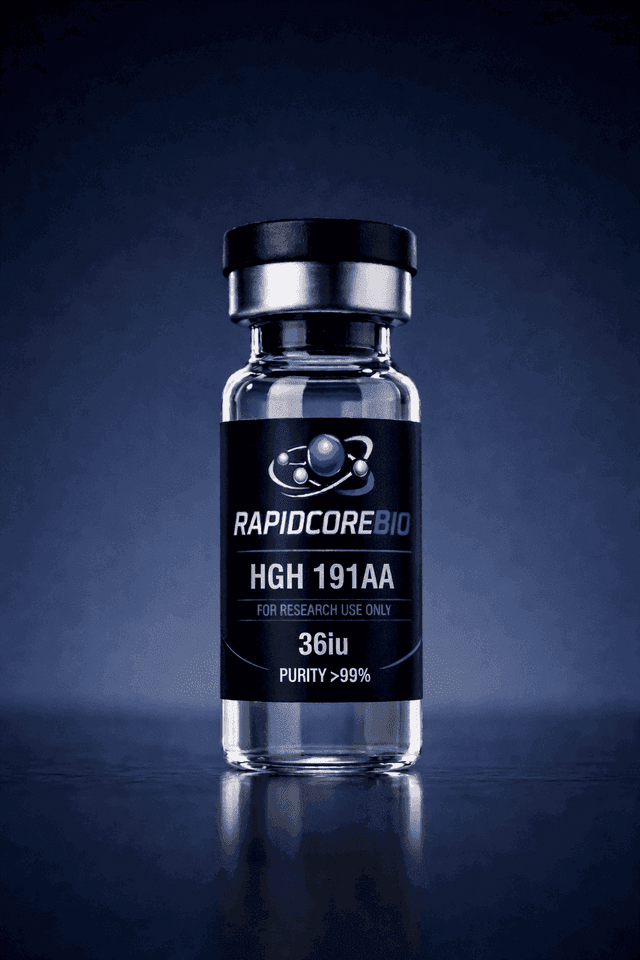
Scientific references may describe sequence, molecular mass, and structural features. These descriptors provide context for understanding terminology; they do not by themselves verify a retail material’s identity, composition, handling history, or suitability for any use. Publications can define similar terms differently, so compare the cited definitions and context instead of relying on a familiar label.
When reading a product document, look for clear definitions of the terms used and the scope of each reported result. Note what the document says directly, which details it leaves out, and whether its definitions are consistent. No single label, percentage, or statement answers every question about a material.
Identity language — note how the document names the material and whether it defines that wording.
Reported attributes — distinguish measurements or observations from descriptions and broader claims.
Method notes — read the stated method and limitations when they are provided in the document.
Scope — check what a document covers and which questions it leaves unanswered.
Research context — interpret a result only within the study or document setting that is described.
Public databases such as PubChem’s somatotropin entry can help readers compare scientific naming and molecular descriptors across references. Database records offer background context; they do not verify a retail material. Reviews of peptide sourcing practices are secondary sources, so consult the cited studies and note their limits. When terminology differs, the original reference is the best place to check how a term is being used.
What Does the Research Evidence Show for HGH-191AA?
Literature about growth-hormone-related compounds includes molecular studies, model-based research, and separate publications about prescription medicines. These sources address different questions. Keeping those contexts distinct helps prevent a finding from one study from being generalized to a different material or purpose. The type of source matters as much as the terminology it uses.
Some papers examine receptor-related pathways or other molecular markers. Their design, materials, and outcomes vary. Common source types include:
In vitro studies describing cell-based pathways or signaling observations, with conclusions limited to the models examined.
Model-based studies with outcomes defined by the authors and conditions described in the original source.
Comparative studies that explain their reference materials, methods, and the limits of each comparison.
ClinicalTrials.gov records that summarize study designs and status, rather than verifying a specific commercial material.
The available literature is not one body of evidence with a single conclusion. It varies by question, model, methods, and study quality. A finding about a molecule does not verify a specific RapidCore Bio product or establish that it is suitable for personal use. Sources cataloged in PubMed can be useful starting points, but consult each paper and its stated limitations. Papers sharing a topic may still use different definitions, source materials, or outcome measures, so review the methods section when available. An abstract or secondary summary can leave out details needed to understand a result. Note whether a citation is an original study or a review, and keep each statement tied to what that source actually examined. A publication may provide background about the broader subject without evaluating a specific product; this distinction should remain clear.
How Should Readers Compare HGH-191AA Research?
This section explains how to read study descriptions and compare their scope. It is not a use guide. RapidCore Bio products are for research use only and are not for human or animal consumption, medical use, diagnosis, treatment, or therapeutic use.
Published papers can differ in study model, setting, materials, and outcome measures. These differences make direct comparisons difficult. Similar labels may refer to different descriptions, so the paper’s methods and source details show what was actually studied. Results belong to the setting described and should not be carried over to another product or purpose. A brief summary cannot replace details about the source material or limitations.
Before drawing conclusions, consider the study’s stated question, methods, and limitations. Descriptions of a research setting make a summary easier to evaluate, but cannot support claims beyond what the authors examined. Compare each statement with the reported methods, note where information is absent, and avoid filling gaps by assumption. If a paper identifies a limitation, carry it into any summary rather than omitting it.
Study parameter | Details reported across published research |
Study model | Population or research model described by source |
Study conditions | Materials, timing, and conditions in source |
Primary study outcome | Outcome measure as defined by the authors |
Other study outcomes | Other measures and limitations reported |
Source record | Original paper or public study record |
When comparing publications, these details help keep each summary tied to its source:
Research question — identify what the authors set out to examine and the scope they state.
Study model — note which system or population the source describes and how it is defined.
Scope and limits — separate reported findings from broader claims or product assumptions.
How Should Readers Interpret Research Limitations?
Review articles summarize research on a defined question. For example, a review of growth hormone and insulin resistance should be read within its cited scope and methods; it does not provide product documentation or establish suitability for personal use. Its title identifies a topic, while the source itself explains the included studies, review approach, and stated limitations. Those details matter when deciding what the article does and does not support.
Published findings can help explain scientific context, but they do not verify the contents of a commercial product or support conclusions beyond the source material. Keep educational discussion separate from product descriptions and from personal-use decisions. A summary should identify what the source covered and avoid implying that it evaluated a product unless the source says so.
Study question: what the authors set out to examine and how they define it.
Study model: the system or population described in the source and its context.
Materials: the study’s stated materials and the limits of those descriptions.
Source limits: what the published work does not establish about other settings or products.
Pro Tip: Compare a claim with the cited paper and check whether the source addresses the same material and question. If not, keep the descriptions separate. Reading the methods and limitations can help explain why two sources reach different conclusions.
Keep each statement tied to its source and avoid turning research descriptions into product or personal-use guidance. Products are for research use only; they are not for human or animal consumption, medical use, diagnosis, treatment, or therapeutic use. The material in a published paper and a product sold under the same name should not be assumed to be identical.
What Is the U.S. Regulatory Context for HGH-191AA?
Public information about prescription somatropin, such as MedlinePlus’s drug information page on somatropin, concerns that medicine and should not be read as approval of HGH-191AA sold by RapidCore Bio. Such reference pages describe their own product and regulatory context; they do not establish the status, composition, or suitability of a different material. This article does not represent HGH-191AA as an approved medicine.
Applicable U.S. requirements can depend on the specific product and how it is distributed. This article is general information, not legal advice. Rules and guidance may change, and a public regulatory resource does not determine the status of an individual product. Readers should rely on current official materials when seeking general information.
For background on one area of drug-compounding rules, see FDA’s guidance on bulk drug substances under Section 503A. That guidance concerns its stated scope and is not a product-specific determination. It should not be used to infer that an unrelated material is approved, permitted for a particular use, or covered by that guidance.
An approved medicine has its own labeling and regulatory record; that status is product-specific.
Research-use-only product information should not be read as a claim of medicine approval or personal-use suitability.
Do not infer a product’s regulatory status from a name, reference, or unrelated drug-information page.
What Should a COA Include?
A certificate of analysis (COA) is a document that presents information about a described material. Its meaning depends on what the issuer reports and what the document covers. A COA does not automatically verify every product attribute or establish suitability for personal use. Readers should treat the record as a description of its stated contents, not as a broader promise.
When reading a COA, note whether it clearly states what the document covers, what information it provides, and what it does not claim:
Material description — the exact name used in the document and any description included by its issuer.
Document source — who prepared or issued it, as stated, and any relevant context provided.
Reported method — what approach the document says was used and any stated limitation.
Results and units — the values or observations shown, along with the context supplied.
Scope and limitations — which questions the document addresses and which remain unanswered.
Date and context — when it was prepared, what source or version information appears, and how the record should be interpreted.
Pro Tip: Read a COA as a specific document, not as a broad promise. If a detail is missing or unclear, do not assume it has been established. The document’s stated scope matters as much as the values it includes.
Documentation and shipping information describe only what the seller states and the available records support. This article does not make claims about storage, handling, or the contents of any specific order. Product documents should be interpreted within their stated limits. Products are for research use only and are not for human or animal consumption.
How Are HGH-191AA, Fragments, and Secretagogues Described?
Peptide literature uses different labels for full-length sequences, fragments, and compounds described as secretagogues. These names reflect distinct descriptions and are not interchangeable. The meaning of each term depends on the source and context. Scientific glossaries and individual papers may define related terms differently, so check each source before comparing them.
When a paper compares categories, start with its definitions and the question it studies. A comparison in one source does not verify the composition of a product or establish that the categories are suitable for any particular use. Keep each description within the original context and avoid treating a research label as a product claim.
Sequence descriptions may distinguish full-length forms from fragments.
Study terminology should be read as each source defines it.
Research findings apply only to the materials and context described.
RapidCore Bio research resources
RapidCore Bio publishes educational information on peptide terminology and related scientific literature. The Research Handbook explains common terms, and the COA documentation page describes how to read available product documents. Interpret each document only within its stated scope. This educational overview does not replace the original sources or the information stated in product documentation.
Products are for research use only. They are not for human or animal consumption, medical use, diagnosis, treatment, or therapeutic use. Research findings discussed in this article do not establish that a RapidCore Bio product is suitable for personal use.