How to Read Research-Use-Only Product Labels
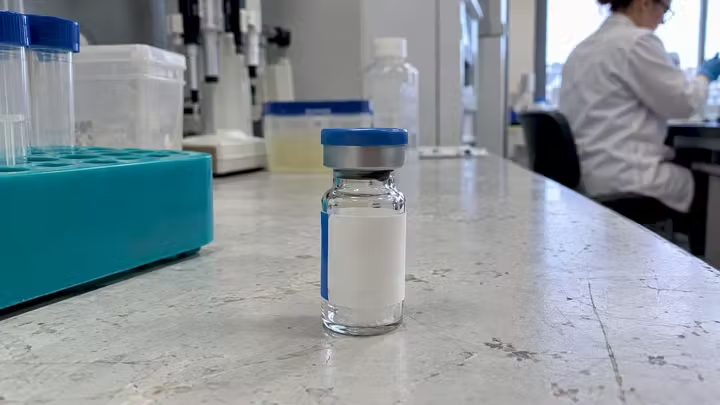
A research-use-only (RUO) label tells you one thing: the seller says the product is meant for laboratory research. It does not tell you the product is pure, sterile, safe or approved. It is a statement of intended use, and the rest of the page has to back it up.
That gap is where most customers get confused. You see “for research use only” on a vial and assume it signals quality. Regulators read it differently, and so should you. Below we walk through what the label means, what to check around it, and the mistakes we see most often.
TL;DR
RUO is an intended-use statement, not a quality grade. It says the product is for laboratory research, not for people or animals.
The label alone proves nothing. The FDA looks at the whole picture: website copy, social posts and how a product is pitched, not just the text on the vial.
Check the page around the label. Look for batch-specific paperwork, plain language about what the product is, and an absence of health or dosing talk.
Walk away from mixed messages. “Research only” next to weight-loss or performance promises is a red flag, not a loophole.
Everything we sell is a research compound. It is not for human or animal consumption.
Table of Contents
What “research use only” actually means
Why the label matters to you as a customer
A quick anatomy of an RUO label
What to check on a product page
Common mistakes customers make
RUO vs. other label types
Red flags in a supplier’s wording
Our perspective: a label is a promise you have to keep
Where to start if you’re comparing suppliers
Shopping with RapidCore Bio
FAQ
Keep learning
Sources
What “research use only” actually means
Start with the source. The FDA’s guidance on products labeled for research use only or investigational use only describes RUO products as being in the laboratory research phase of development. They are not subject to the FDA’s current good manufacturing practice requirements, and they are not cleared or approved for diagnostic or therapeutic use.
Read that twice. “Not subject to” is not the same as “held to a higher standard.” It means the product sits outside the review system that applies to medicines.
The formal RUO wording comes from device rules. The FDA’s page on in vitro diagnostic device labeling lists the exemptions that apply to shipments of diagnostic products still in research. Peptides are not diagnostic devices, but the phrase “research use only” carries the same core idea: this item is for the bench, not for a patient.
For a deeper walk through the term, see our research use only meaning guide.
What the label does not promise
An RUO label does not promise:
Purity, potency or stability
Sterility
That the contents match the name
Any safety or effectiveness review
Any approval by a regulator
The FDA has said plainly that when such products are used outside a research setting, there is no guarantee of quality, safety or identity. The label is a boundary line, not a seal of approval.
Why the label matters to you as a customer
Maybe you’re a curious reader following peptide science. Maybe you’re buying supplies for a project. Either way, the label shapes what you can trust and what you can’t.
Here is the real question behind the search: “How do I tell a careful supplier from a sloppy one?” The label is the starting point, because a careful supplier uses it honestly. A sloppy one uses it as a disguise.
The FDA does not treat the words on a vial as the final word. Under 21 CFR 201.128, intended use is judged by the objective intent of the people responsible for the product. That intent can show up in labeling, advertising and the circumstances of distribution. So a vial that says “research only” can still be treated as an unapproved drug if everything around it says otherwise.
You can see this in enforcement. In an August 2026 warning letter to NuScience Peptides, the FDA reviewed a company’s website product names and descriptions. An earlier warning letter to USApeptide.com noted that statements such as “research use only” and “not for human consumption” appeared on the labeling and website, yet evidence from the site pointed to a different intended use. The Atomix LLC letter makes the same point.
The takeaway for you: a label can be technically present and still be worthless.
A quick anatomy of an RUO label
Labels vary, but an honest one usually has a few things in common. Here is what to look for and what each element tells you.
Element | What it tells you | What it does not tell you |
“For research use only” statement | The seller intends laboratory use | That the product is high quality |
“Not for human or animal consumption” | The seller is not marketing it as a drug or supplement | That it is safe to handle without care |
Product name | What the seller says is inside | That the contents match without supporting paperwork |
Batch identifier | Which production run the item came from | Anything about quality by itself |
Storage note | How the seller recommends keeping the item | That it has been kept that way in transit |
Link or reference to analytical paperwork | The seller documents each batch | That you’ve read and understood it |
Notice how much of the useful information sits outside the sentence people fixate on. The statement is the easy part. The supporting detail is where you separate suppliers.
What to check on a product page
The vial is only part of the picture. Most of your decision happens on the page. Use this checklist.
1. Is the language consistent from top to bottom?
Read the product description, the category page, the blog and the social links. Everything should treat the item as a laboratory material. If the label says research only but the page talks about how you’ll feel, look or perform, the label is decoration.
The FDA’s reasoning is spelled out in its concerns about unapproved GLP-1 drugs: it warns about versions sold falsely as being for research or not for human consumption. Names like semaglutide, tirzepatide, retatrutide (a triple-receptor agonist in research literature), survodutide and mazdutide appear on that list.
2. Are there health claims, testimonials or how-to guides for personal use?
Testimonials about results, before-and-after stories and instructions for using a product on yourself are not what laboratory suppliers publish. Their presence tells you the seller is treating a research compound as a consumer product. That is a problem for the seller and, in practice, for you.
3. Is there batch-specific documentation?
A certificate of analysis (COA) is the document a supplier uses to show what was checked for a given batch. Look for one tied to the batch you are buying, not a generic sample posted once and recycled. Check that the name of the product on the document matches the name on the page.
We publish a COA for each batch we sell. Our terminology guide for COA trust signals breaks down how to read one.
4. Does the seller say who tested it?
Vague phrases like “lab tested” mean little. A named, independent laboratory relationship means more, because the seller is willing to point to a party outside its own walls. We partner with third-party laboratories and say so openly.
5. Can you reach a person?
A real contact path and responsive support are a quiet sign of a real business. If the only way to ask a question is a form that never answers, treat that as information.
6. Is the product name straightforward?
Be wary of names that are really marketing: combining a research label with promises in the product title itself. The FDA’s warning letter review looked at product titles on websites, which means titles count.
Common mistakes customers make
These come up again and again.
Treating RUO as a quality badge. The label describes intended use. Quality comes from documentation, testing and consistency.
Assuming “not for human consumption” is a legal shield. It isn’t. As the FDA’s reading of intended use shows, the disclaimer does not cancel out what a seller says and does elsewhere.
Trusting a COA without reading it. A document that doesn’t match the product name or batch is a warning, not reassurance.
Ignoring the rest of the site. One clean label and a page full of wellness promises is a mixed message. Believe the page.
Letting price decide. Unusually cheap material with thin paperwork usually costs you in other ways.
Taking forum advice as a spec sheet. Community posts are opinions. They are not documentation and they are not a substitute for a supplier’s own records.
Confusing RUO with IUO. They sound alike but differ. RUO covers products in the laboratory research phase. Investigational use only (IUO) covers products being studied in clinical investigations. The FDA’s guidance on both labels draws that distinction, and a peer-reviewed overview in PMC explains why the agency separates the two even though many researchers don’t.

RUO vs. other label types
People search for these differences constantly, so here is a plain comparison.
Label | Typical meaning | Where you see it |
Research use only (RUO) | Laboratory research phase, not for clinical use | Lab reagents, research compounds |
Investigational use only (IUO) | Under study in a clinical investigation | Diagnostic products in trials |
FDA-approved or cleared | Reviewed for a specific use | Medicines, cleared devices |
Dietary supplement | Sold under a different regulatory framework | Consumer products |
If a product claims to be in more than one of these categories at once, ask which rule it actually follows. The FDA has said that labeling a product meant for clinical use as RUO is misleading, and that the agency’s RUO and IUO guidance still stands.
For the compliance side of this, our post on RUO labeling requirements goes further, and our RUO vs IVD checklist covers the diagnostic angle.
Red flags in a supplier’s wording
The words a seller picks tell you a lot. Treat the following as reasons to stop and reconsider:
Talk of results people will see, feel or experience
Weight-loss, appetite or performance promises attached to a research item
Instructions for personal use of any kind
Testimonials from buyers describing effects on themselves
A “research only” line that appears only in the footer or a tiny disclaimer
No batch paperwork, or paperwork that is the same for every product
Pressure tactics such as countdown timers and “last chance” language
The FDA’s enforcement focus here is consistent. It has warned companies selling unapproved drugs containing semaglutide, tirzepatide and similar compounds that were falsely labeled for research or not for human consumption. For a field-tested list, see our RUO supplier red flags post.
Our perspective: a label is a promise you have to keep
We think the research-use-only label should be treated as a commitment, not a loophole. If we put it on a product, everything we publish about that product has to match it: the product page, the blog, the support replies.
That is why our site sticks to what a research compound actually is. We don’t give dosing, administration or reconstitution instructions. We don’t make health claims. We don’t publish testimonials about personal effects. When we write about compounds like semaglutide or tirzepatide, it is to explain how they are discussed in research, such as in our comparison of semaglutide, tirzepatide and retatrutide.

We also know many readers on this site are curious rather than professional researchers. That’s fine. Curiosity is how most people start. But a curious reader deserves the same honesty as a lab: the product is a research material, it has not been reviewed as a medicine, and it is not meant for people or animals.
What we’d ask of any supplier, ourselves included, is simple. Publish batch-level paperwork. Name your testing partners. Keep your words consistent. Answer questions. If a supplier can’t do those four things, the label is just ink.
— Adrian K. Solis
Where to start if you’re comparing suppliers
Here’s a short routine you can run in about ten minutes:
Open the product page and read the whole description. Look for any language about personal results.
Find the batch paperwork and check that the product name matches.
Look for a named independent laboratory relationship.
Scan the rest of the site and the blog for dosing or health talk.
Send one question to support and see how they answer.
Confirm that shipping and handling details are clear.
If a supplier passes all six, you have a reasonable basis to continue. If one fails, ask why. If two fail, move on.
Shopping with RapidCore Bio
We distribute research-grade peptides for laboratory use in the United States, with published COAs for every batch, third-party verification and rapid U.S. shipping. You can browse our research peptides, look at peptide stacks, or see the full shop page. We also carry bacteriostatic water as a laboratory supply.
All of it is for research use only. Not for human or animal consumption.
FAQ
What does it mean when a product says “for research use only”?
It means the seller intends the product for laboratory research and not for use in people or animals. It is not a purity guarantee or an approval. The FDA describes RUO products as being in the laboratory research phase and outside the agency’s usual manufacturing requirements for approved products.
What is the difference between RUO and IUO?
RUO products are in the laboratory research phase of development. IUO products are being studied in clinical investigations. The FDA covers both in the same guidance document, and each has its own labeling statement.
Does an RUO label make a product legal to sell however the seller likes?
No. The FDA judges intended use from labeling, advertising and the circumstances of distribution, as 21 CFR 201.128 describes. A seller whose website points toward human use can face enforcement despite the label.
Is a research-use-only product safe for people?
It has not been reviewed for that. The FDA says products sold this way carry unknown quality, safety and manufacturing conditions and urges people not to buy them for human use. If you have a health question, talk to a licensed clinician.
What is an RUO vendor?
It’s a business that sells materials for laboratory research and labels them accordingly. A trustworthy one keeps its marketing consistent with that label and publishes batch-level documentation.
Keep learning
If you want plain-English definitions for the terms on labels and paperwork, our Research Glossary is the best next stop. Bookmark it before your next supplier comparison.
Sources
FDA: Concerns with Unapproved GLP-1 Drugs Used for Weight Loss
FDA: Laboratory Developed Tests FAQs, Definitions and General Oversight
Recommended