Pass Audits With Peptide Packaging That Shows Lot COAs and Cold Chain
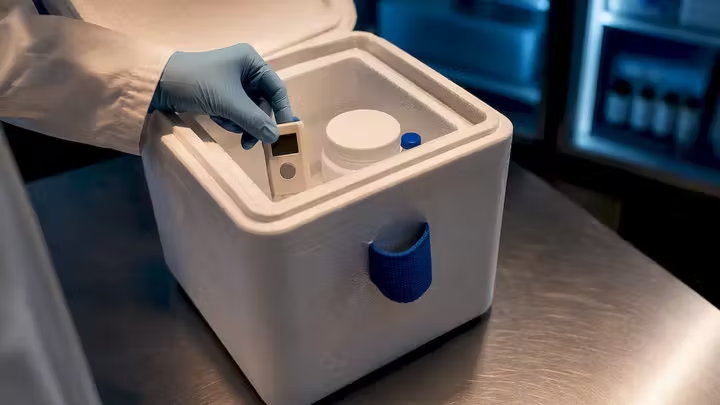
The minimum standard for research-grade peptides is a lot-specific COA, a primary container that controls moisture and oxygen exposure, and a documented cold chain with temperature logging from dispatch to receipt. Lyophilized peptides should stay lyophilized until you need them, since reconstituted solutions demand their own validated, short-window storage controls. Every lab receiving a shipment should retain the COA, lot number, and temperature record as a single package, not three scattered files.
TL;DR:
Peptides require lot-specific certificates of analysis, controlled packaging, and a documented cold chain with temperature logging during transit and storage.
Type I glass vials with minimal headspace and inert gassing reduce oxidation and contamination risks, especially for oxidation-prone or sensitive peptides.
Long-term lyophilized peptide storage should be at -20°C or -80°C in sealed, desiccated containers, while reconstituted solutions should not exceed 14 days at 2–8°C.
Manual-defrost freezers are preferred for storing peptides because frost-free cycles can accelerate degradation due to temperature fluctuations.
Labeling must include peptide ID, lot, concentration, date, and guidance, with records of COAs, raw analytical data, and chain-of-custody to ensure traceability and support verification.
Table of Contents
Quick Packaging and Documentation Checklist for Receiving Labs
Why Primary Container and Closure Choices Matter
How Should You Store Lyophilized vs. Reconstituted Peptides?
What Labeling and Traceability Records Should You Keep?
Shipping and Cold-Chain Packaging: Keeping Integrity in Transit
Handling in the Lab Without Compromising Sample Integrity
What Should a Stability-Verifying COA Actually Show?
[An effective approach to documentation and cold-chain support includes treating COAs as operational documents rather than marketing collateral. Reliable distributors provide batches with lot-specific analytical verification and support labs in confirming temperature excursions or tracing lots through their history. If your team is building out storage infrastructure, our storage containers buying guide and shelf-life guidance cover the practical decisions most labs face first.](#an-effective-approach-to-documentation-and-cold-chain-support-includes-treating-coas-as-operational-documents-rather-than-marketing-collateral-reliable-distributors-provide-batches-with-lot-specific-analytical-verification-and-support-labs-in-confirming-temperature-excursions-or-tracing-lots-through-their-history-if-your-team-is-building-out-storage-infrastructure-our-storage-containers-buying-guidehttpswwwrapidcorebiocompostpeptide-storage-containers-and-shelf-life-guidancehttpswwwrapidcorebiocompostpeptide-shelf-life-cover-the-practical-decisions-most-labs-face-first)
Procurement decisions benefit from COA verification processes designed around laboratory needs at receiving: lot-specific HPLC and mass spectrometry data that can be checked against the physical vial, rather than generic purity claims.
Sources
FAQ
Quick Packaging and Documentation Checklist for Receiving Labs
Before a vial goes anywhere near your bench, run through receipt checks. Confirm the lot number on the vial matches the lot number on the certificate of analysis, inspect the container for cracks or seal failure, and log the temperature indicator’s status immediately.
Confirm lot number, COA, and physical vial condition on arrival
Move product to correct storage (frozen or refrigerated) within minutes, and start or stop the temperature logger
Label the vial with peptide identity, lot, and date received if not already marked
File the COA, packing list, and temperature log together before the sample enters inventory
Pro Tip: Photograph the shipping container’s interior and the temperature indicator before you unpack anything. If an excursion dispute comes up later, that photo is often the fastest way to resolve it.
Why Primary Container and Closure Choices Matter
Type I borosilicate glass vials are the default for a reason: they are chemically inert, resist moisture ingress, and don’t leach the extractables that some plastics introduce into a peptide solution over time. Plastic containers can adsorb peptide onto their walls, particularly at low concentrations, which quietly skews recovery and reproducibility.
Stopper chemistry deserves the same scrutiny. Elastomeric closures vary in formulation, and some rubber compounds interact with peptides or shed particulates into solution. If your protocol is sensitive to trace contamination, ask the supplier for closure compatibility information rather than assuming one stopper is interchangeable with another.
Headspace matters too. A vial with excess air above a lyophilized cake gives oxygen more room to interact with oxidation-prone residues, so sealed vials with desiccant, and sometimes an inert-gas purge before sealing, cut that risk considerably.
Type I glass for chemical inertness and low extractables
Elastomeric stopper compatibility data when sensitivity to leaching is a concern
Minimal headspace and desiccant packs for hygroscopic peptides
Nitrogen or argon purging for peptides known to oxidize readily
How Should You Store Lyophilized vs. Reconstituted Peptides?
Storage temperature is not a single number. It depends on the peptide’s physical state and how long it needs to sit before use.
Lyophilized powder, long-term: Store at -20°C or -80°C in a sealed, desiccated container. Reports suggest lyophilized peptides kept this way often retain high purity for 12 to 24 months, though stability is sequence-dependent and should be verified per lot.
Lyophilized powder, short-term working stock: 2–8°C is generally acceptable for brief periods, provided the container stays sealed and desiccated.
Reconstituted solution: This is the most fragile state. Solvent pH, temperature, concentration, and amino-acid sequence all drive degradation rate, and common lab practice limits working stocks to 7 to 14 days at 2–8°C, with aliquoting into single-use volumes for anything stored longer at -20°C or -80°C.
Manual-defrost freezers matter more than most labs realize. Frost-free units cycle through automatic defrost, and those temperature swings accelerate degradation in stored peptide material, even when the freezer’s average reading looks fine on a logbook.
Pro Tip: If your freezer inventory doesn’t specify manual versus frost-free defrost, check the model number before you trust it with anything you can’t easily replace.
What Labeling and Traceability Records Should You Keep?
A usable label carries the peptide identifier, lot number, concentration and solvent for any prepared stock, preparation date, operator initials, and retest or hold guidance. Skip any of those and you lose the ability to reconstruct what happened to that vial six months from now.
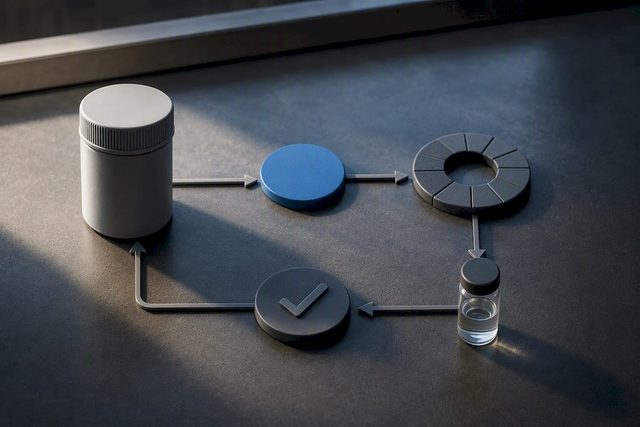
Behind the label, your records should include the supplier’s COA, the raw HPLC and mass spectrometry reports behind it, and a chain-of-custody note covering every transfer the sample went through.
Three terms get used loosely and shouldn’t be. A retest date marks when a lot needs re-verification, not when it necessarily expires. An expiration date reflects the point past which the material is no longer supported by stability data. A beyond-use date is often lab-assigned for prepared solutions, based on your own validated hold time rather than the manufacturer’s original claim.
Peptide ID, lot, concentration/solvent, date, initials, retest guidance on every label
Supplier COA plus raw HPLC/MS reports filed with the sample record
Freeze-thaw cycle counts and any temperature-excursion notes logged per vial
Shipping and Cold-Chain Packaging: Keeping Integrity in Transit
Shipper selection should match transit time, not habit. Extended multi-day transit generally calls for dry ice in an insulated shipper rated for that duration, while short refrigerated hops between labs can often rely on gel packs. Cold-chain fulfillment for research peptides depends on temperature mapping, lot tracking, and complete documentation riding along with the shipment, not just inside a database somewhere.
A temperature indicator or digital data logger inside the box turns “we think it stayed cold” into a verifiable fact. Define your acceptance criteria before the shipment ships. Decide in advance how many minutes above a threshold triggers rejection, and put that number in writing so nobody is negotiating it on receiving day.
Carrier selection matters more than many labs budget for. A next-day or two-day guaranteed service level is worth the added cost for anything shipped on dry ice, since a delayed ground shipment sitting in a warm truck for an extra day defeats the entire cold-chain investment.
Every shipment should travel with:
Lot-specific certificate of analysis
Safety data sheet (MSDS)
Lot-level packing list matching the COA
Clear “for research use only” labeling on the outer packaging
Peptide degradation studies comparing storage conditions have found that a 0.1% TFA solution held between 4°C and -80°C slowed degradation relative to warmer or less-controlled conditions in tryptic-digest samples, a reminder that cold-chain discipline isn’t a formality. It’s the variable most directly tied to what you’ll actually measure later.
Handling in the Lab Without Compromising Sample Integrity
Good handling starts before you ever open the vial. Keep solvents pre-chilled and work on ice when the protocol calls for it, then aliquot into single-use volumes immediately rather than pulling repeatedly from one stock. Every freeze-thaw cycle you avoid is degradation you don’t have to explain later in a failed assay.
Minimizing headspace in prepared aliquots, and adding an inert-gas overlay for oxidation-prone sequences, is one of the cheaper insurance policies available to a lab. For anything marketed with a sterility claim, ask the supplier for the endotoxin data behind it, and run your own sterility testing when the application demands it.
Pre-chill solvents and work on ice for sensitive preparations
Aliquot immediately into single-use volumes to cut freeze-thaw exposure
Minimize headspace; add inert gas for oxidation-sensitive peptides
Request sterility and endotoxin data for anything marketed as sterile
Dispose of degraded or suspect material per your institution’s biosafety guidance
For calculation-heavy prep work, our guide on peptide reconstitution walks through the numbers researchers use to plan working stock volumes.
What Should a Stability-Verifying COA Actually Show?
A COA that just says “keep frozen” isn’t stability evidence. It’s a storage suggestion. Legitimate shelf-life and hold-time claims require lot-specific, real-time stability data generated with validated analytical methods, not a generic instruction copied across every product page.
Look for numerical storage conditions tied to a specific lot, not a blanket statement applied to an entire catalog. The analytical endpoints that matter most are identity confirmation, intact-peptide content over time, related substances or degradation products, aggregation levels, and residual moisture in the lyophilized cake.
Lot-specific stability protocol with numerical storage conditions
Stability-indicating HPLC and mass spectrometry data, not just a purity snapshot
Documented aggregation and related-substance levels alongside intact-peptide content
Your own re-verification after any suspected temperature excursion or before a critical assay
Formulation strategies involving antioxidants, buffer selection, and air exclusion are central to limiting aqueous peptide degradation, which is exactly why a vendor’s storage recommendation should come with the data behind it, not just the instruction.
An effective approach to documentation and cold-chain support includes treating COAs as operational documents rather than marketing collateral. Reliable distributors provide batches with lot-specific analytical verification and support labs in confirming temperature excursions or tracing lots through their history. If your team is building out storage infrastructure, our storage containers buying guide and shelf-life guidance cover the practical decisions most labs face first.
Procurement decisions benefit from COA verification processes designed around laboratory needs at receiving: lot-specific HPLC and mass spectrometry data that can be checked against the physical vial, rather than generic purity claims.
That distinction matters when you’re the one signing off on chain-of-custody for an audit or a grant renewal. Our COA verification page lets you pull lot-specific analytical reports directly, and our research handbook covers the procurement and storage questions that come up most often from lab managers. If you’re evaluating research-grade peptides for an upcoming project, reach out with your lot and shipping questions before you order. Getting the packaging and documentation details confirmed up front saves you the harder conversation later.
Sources
Base your lab’s written storage policy on primary evidence: PepGuide’s stability review, ChemVerify’s reconstitution guidance, and your suppliers’ lot-specific COAs.
Peptide Storage and Reconstitution: Stability Evidence and Quality | PepGuide
Proteolytic peptides: storage condition comparison (PMC article)
Designing formulation strategies for enhanced stability of therapeutic peptides (MDPI review)
FAQ
What is the minimum packaging requirement for research peptides?
A lot-specific COA, a container that controls moisture and oxygen exposure, and a documented cold chain with temperature logging during transit and storage.
How long can a reconstituted peptide solution be stored?
Common lab practice limits working stocks to 7 to 14 days at 2–8°C, with longer storage requiring aliquoting and freezing at -20°C or -80°C.
Should peptides be stored in a frost-free or manual-defrost freezer?
Manual-defrost freezers are recommended, since automatic defrost cycles create temperature fluctuations that accelerate degradation in stored peptide material.
What’s the difference between a retest date and an expiration date?
A retest date marks when a lot needs re-verification; an expiration date marks the point past which the material is no longer supported by stability data.
Where can I verify a peptide lot’s certificate of analysis?
Rapidcorebio’s COA verification page provides lot-specific HPLC and mass spectrometry reports for its distributed peptides.
Recommended