4 Documents Labs Must Have to Verify Peptide Chain of Custody
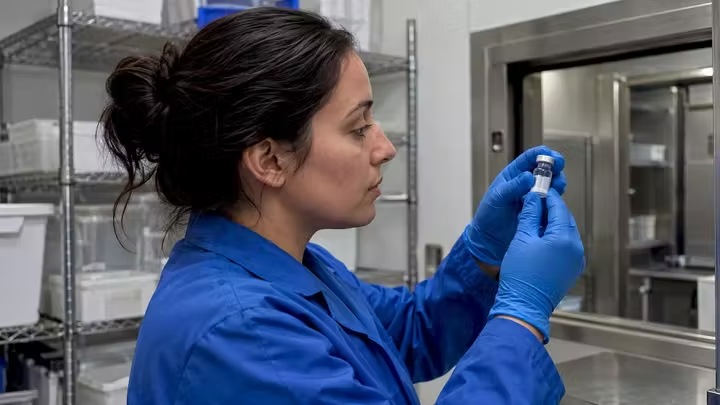
A defensible chain of custody for peptides is a continuous, auditable record set that links the vial to its batch record, analytical raw data, labeling and repack records, and time-temperature shipment and receipt logs. Before accepting any lot, request the executed batch record, the Certificate of Analysis with its underlying raw data, the shipment’s temperature log, and a signed receiving confirmation. If a supplier cannot produce all four, the chain is broken.
TL;DR:
Request the full batch record, raw analytical data, shipment temperature log, and signed receipt confirmation before accepting any peptide lot, as missing any breaks the chain of custody.
Verify that packaging and shipment temperature controls include validated qualification and actual in-transit monitoring with calibrated, tamper-evident loggers, not just supplier-provided stability data.
Confirm that the Certificate of Analysis is backed by raw data such as chromatograms, spectra, and instrument calibration records to ensure result reliability and traceability.
Immediately match labels, lot numbers, and temperature logs upon arrival, quarantine any discrepancies, and document all issues before inventory entry to close custody gaps.
Maintain consistent lot identifiers across all records, adopt version control, and retain documentation securely and retrievably for audit readiness and reproducible research.
Table of Contents
1. Product specification and lot-level records you must verify
2. Packaging and shipment controls: what temperature evidence to insist on
3. COAs versus raw analytical data: what auditors expect
4. Receiving, quarantine, and storage practices that close the custody loop
5. Common custody gaps auditors find and a short verification checklist
6. How RapidCoreBio’s stated practices map to custody expectations
7. Documentation and record-keeping best practices to maintain chain of custody integrity
8. Regulatory compliance requirements related to chain of custody for peptides
9. Procedures for handling deviations and discrepancies in the chain of custody
10. Training requirements for personnel involved in chain of custody processes
11. Technological solutions and software used for tracking and monitoring chain of custody
12. Security measures to prevent tampering or contamination during handling and transport
A short reflection on custody and reproducibility
Where to start: verified peptides and published COAs
FAQ
Sources
1. Product specification and lot-level records you must verify
A peptide’s specification document is the anchor for everything downstream. Before any synthesis, repackaging, or shipment step is trustworthy, the specification itself needs to identify the material name, physical form, required storage condition, lot identifier, and, for derivatives, the parent lot it was built from. We treat a missing parent-lot field as a red flag, not a formatting quirk.
The executed batch record carries the evidentiary weight. It documents each processing step, operator stamps, any deviations encountered, and the yield achieved, which is why auditors treat it as the backbone artifact rather than a supporting document. A procurement guide for verified sourcing walks through exactly which fields to request from a supplier before a purchase order goes out.
For derivatized or repacked material, the parent-to-child link has to exist as a structured field, not a verbal assurance. Ask directly:
Request the executed batch record and parent-lot linkage for the specific lot number in question.
Ask whether any repackaging occurred between synthesis and sale, and if so, who performed it and when.
Confirm the release date and retest date tied to that lot, not a generic shelf-life statement.
2. Packaging and shipment controls: what temperature evidence to insist on
Packaging qualification and in-transit monitoring answer two different questions, and conflating them is a common custody error. Qualification runs prove a shipping configuration can hold temperature under test conditions. They say nothing about whether a specific shipment actually stayed cold. Only a data logger or single-use indicator traveling inside the box answers that. USP General Chapter <1079> frames cold-chain management as a system of qualified packaging, active monitoring, and contingency planning, not any single component standing alone.
When you receive a logger file, check these attributes before trusting it:
Calibration status and date, ideally traceable to a recognized standard.
Time-synchronized stamps that match the shipment’s actual transit window.
A sample rate tight enough to catch brief excursions, not just hourly snapshots.
Defined alarm thresholds and a tamper-evident or digitally signed file format.
A brief excursion does not automatically disqualify a shipment. Supplier-provided stability data or a written justification addressing duration and peak temperature can support continued acceptance; an unexplained or prolonged excursion with no supporting rationale should not.
Pro Tip: Photograph the shipping container the moment it arrives, before opening, and download the logger file immediately. Packaging artifacts and digital logs both degrade in evidentiary value the longer they sit unreviewed.
3. COAs versus raw analytical data: what auditors expect
A Certificate of Analysis is a summary document, and treating it as the finish line is the single most common custody mistake we see. The COA should name the test method, its reference number, and the parameters applied, since a results table with no method identity tells you little about reliability.
Behind every trustworthy COA sits a stack of raw-data artifacts:
Chromatograms and their integration tables.
Mass spectra confirming identity.
System suitability results demonstrating the instrument was performing within acceptance criteria at the time of testing.
Instrument calibration records and audit trails.
When you want to verify a result rather than take it on faith, ask for the method SOP reference, the system suitability acceptance data from that run, and the calibration certificate for the instrument used. Our peptide Certificate of Analysis guide breaks down how to read a COA against these raw-data expectations line by line.
Regulatory guidance treats this raw-data layer as foundational, not optional. ICH Q7’s Q&A guidance notes that a COA should identify the original manufacturer to preserve traceability, and that material transferred under quarantine requires documented controls and written agreements between parties. A COA that cannot be traced back to an identified manufacturer and a documented analytical run is a summary with nothing behind it.
4. Receiving, quarantine, and storage practices that close the custody loop
Custody does not end at the dock door. What happens in the first few minutes after arrival determines whether the record stays intact.
Reconcile labels, lot numbers, and unit counts against the packing list immediately, and photograph the packaging along with any temperature readout before opening anything.
Retain the data logger file and sign a receiving worksheet that records date, time, condition on arrival, and the person accepting the shipment.
If labels do not match the manifest, if the logger shows an unexplained excursion, or if packaging appears compromised, quarantine the material, notify the responsible quality contact, and document the issue before it enters inventory.
Log the lot into your tracking system or LIMS, referencing the FDA ORA Laboratory Manual’s sample-management procedures for sealing, documentation, and disposition as a model for internal receiving records.
For storage, avoid frost-free freezers for anything held long term; their automatic defrost cycles create temperature swings that accelerate degradation. NIBSC storage guidance recommends static mechanical freezers at or below -20°C, allowing lyophilized vials to reach room temperature in a sealed container before opening to prevent condensation, aliquoting on first use, and minimizing freeze-thaw cycles. Our peptide shelf-life guide covers these storage rules in more depth.
5. Common custody gaps auditors find and a short verification checklist
A useful domain-based model for peptide traceability identifies six linked record categories, raw material, synthesis lot, modification, labeling and repack, analytical release data, and shipment history, and notes that a gap in any single domain breaks the chain even when every other record looks clean, according to an analysis of peptide chain-of-custody record standards. Repackaging is flagged as the most frequent break point. Quantity reconciliation and label-issue records tied to the repack operator and date often go undocumented.
Typical weaknesses auditors flag:
Raw data referenced on the COA but never actually provided on request.
Parent-child lot links that exist in name only, with no structured record behind them.
Label reconciliation gaps between the physical vial, the packing slip, and the COA.
Logger files with no calibration record or missing timestamps.
Repack events with no operator, date, or reconciled quantity on file.
Run the reconciliation in order: batch record, then COA, then label, then shipping manifest, then receiving log. A minor deviation, a slightly late retest date with no quality impact, is manageable with documentation. A missing raw-data set or an unexplained quantity mismatch is disqualifying. Copy this sequence directly into your receiving SOP.
6. How RapidCoreBio’s stated practices map to custody expectations
We built our own quality process around the evidentiary gaps described above. Our batches carry batch-level third-party verification, and we publish a Certificate of Analysis for each one rather than a generic specification sheet.
COAs are posted on our COA verification page for review before or after purchase.
Third-party testing results back the identity and purity figures listed on each COA.
We still recommend requesting the underlying raw data and shipment records described above, since independent verification is part of a defensible chain regardless of supplier.
Every product we distribute is positioned strictly as a research compound, not for human or animal use.
7. Documentation and record-keeping best practices to maintain chain of custody integrity
Record-keeping discipline is what turns a collection of documents into an actual chain. Every artifact, the specification, the batch record, the COA, the logger file, the receiving worksheet, needs a consistent lot identifier running through it, because a chain built on inconsistent naming conventions is nearly impossible to audit later.

Version control matters as much as content. When a specification or SOP changes, the old version should stay retrievable with a date stamp, not be overwritten, so an investigator can reconstruct what was in effect at the time a given lot moved through the system. Retain original file formats where possible: a scanned PDF of a chromatogram loses metadata that a native instrument file preserves.
Set a retention policy before you need one. Decide, in writing, how long batch records, raw data, and shipment logs stay accessible, and store them somewhere a future audit can reach without depending on one person’s inbox or a laptop that eventually gets replaced. Cross-reference every document: the receiving worksheet should cite the shipment manifest number, the manifest should cite the lot number, and the lot number should trace back to the COA and batch record.
A practical habit worth adopting: build a single-page index per lot that lists where each artifact lives, who holds it, and the date it was filed. It takes a few minutes to create and saves hours when someone needs to answer a traceability question six months later.
8. Regulatory compliance requirements related to chain of custody for peptides
Peptides sold for laboratory research sit outside the approval pathways that govern therapeutic drugs, but the documentation expectations that regulators apply to pharmaceutical materials are still the most rigorous model available, and we lean on them deliberately.
The FDA ORA Laboratory Manual describes sealing reserve samples with visible, tamper-evident seals, documenting receipt and disposition in a tracking system such as FACTS, and recording every transfer of custody. That same discipline, applied to a peptide lot moving from synthesis lab to distributor to buyer, is what makes a chain defensible rather than aspirational.
ICH Q7, written for active pharmaceutical ingredient manufacturing, offers guidance that translates directly: a Certificate of Analysis should identify the original manufacturer, and any transfer of material under quarantine status requires documented controls and a written agreement between the parties involved, per the ICH Q7 Q&A document. A supplier unwilling to name the original manufacturer behind a lot is asking a buyer to accept a traceability gap by default.
Separately, laboratories need to understand their own legal footing for purchasing and handling peptides in a research context, which varies by compound and intended use. Our peptide legality compliance checklist covers the boundaries labs should keep in view, and every peptide we distribute is labeled and sold strictly as a research compound, not for human or animal consumption.
9. Procedures for handling deviations and discrepancies in the chain of custody
A deviation is not automatically a disqualifying event. It is a trigger for documentation and judgment, and the two should never be collapsed into one step.
The first move is always to stop and record, not to proceed and explain later. Note what was expected, what was observed, when the discrepancy was found, and who found it. A temperature excursion logged at 4°C above threshold for eleven minutes during transit is a different event than the same excursion sustained for six hours, and the record needs to capture duration and magnitude, not just the fact that a threshold was crossed.

Classify the deviation before deciding what to do with the lot. A late retest date with no analytical impact, a minor label typo that does not affect lot identification, or a brief, well-documented excursion supported by stability data can often be resolved with a written justification and continued use. A missing raw-data set, an unreconciled quantity discrepancy, or an unexplained prolonged excursion should move the material to quarantine pending supplier response, not into active inventory.
Every deviation needs a named decision-maker and a closed loop: what was found, who evaluated it, what evidence supported the resolution, and what action followed. An open deviation with no documented resolution is itself a custody gap, independent of whatever the original discrepancy was.
10. Training requirements for personnel involved in chain of custody processes
Custody integrity depends on the people handling the paperwork as much as the paperwork itself. Anyone receiving, logging, or transferring peptide shipments needs working familiarity with what a complete record set looks like, not just a checklist to follow mechanically.
Training should cover how to read a data logger file and recognize what a calibration gap or a missing timestamp actually means for the shipment’s credibility. It should cover label reconciliation: matching lot numbers across the vial, the packing slip, and the COA, and knowing when a mismatch is a typo versus a genuine identity problem. It should also cover when to escalate: who gets notified when a shipment looks compromised, and what the quarantine process requires of the person who first notices the issue.
The FDA ORA Laboratory Manual is explicit that shipping regulated samples requires trained personnel, not ad hoc handling by whoever happens to be available. That standard translates well to a research setting: a lab that rotates receiving duties among untrained staff is more likely to miss the discrepancies that matter.
Refresher training matters as much as initial onboarding, particularly when SOPs change or a new tracking system comes online. A documented training record for each person touching custody-relevant material gives an auditor confidence that the process, not just the paperwork, was followed consistently.
11. Technological solutions and software used for tracking and monitoring chain of custody
Manual spreadsheets are giving way to dedicated tracking tools across peptide research operations, and the shift reduces a specific category of error: transcription mistakes and lost version history. Digital inventory and tracking apps now offer searchable histories, structured lot fields, and reconstitution calculators that centralize what used to live across scattered documents, according to app store listings for peptide tracking tools.
The value of any digital system depends on whether it preserves the same evidentiary rigor a paper record would. A tracking app is useful for custody purposes only when entries are time-stamped, attributable to a specific user, and resistant to silent editing. A spreadsheet that anyone can overwrite without a change log provides less custody integrity than a signed paper form, regardless of how organized it looks.
Temperature-monitoring technology follows the same principle. A logger’s software output needs to tie back to a calibrated device with a verifiable record, a point industry guidance interpreting USP <1079> makes directly: treat packaging and monitoring devices as system components requiring their own calibration verification, not as self-evident proof of a controlled chain.
For labs managing multiple suppliers and lot numbers, a LIMS or dedicated tracking platform that links receiving records to COAs and shipment logs is worth the setup time. The goal is not adopting technology for its own sake. It is making the custody chain searchable and harder to break accidentally.
12. Security measures to prevent tampering or contamination during handling and transport
Physical security is the layer that protects everything else on this list from being quietly invalidated. A perfect paper trail means little if the vial itself was accessible to tampering between synthesis and delivery.
Tamper-evident seals on shipping containers and individual vial packaging give receiving staff a first-line check: a broken or missing seal on arrival should trigger quarantine before the box is even fully opened. The FDA ORA Laboratory Manual’s sealing procedures describe visible seals on reserve samples specifically so that any intervening access leaves evidence, a principle that applies just as well to commercial peptide shipments.
Contamination control during handling matters alongside tampering. Vials should be inspected visually on arrival for discoloration, unexpected moisture, or packaging damage before they are logged into inventory. Personnel handling material between receiving and storage should follow consistent aseptic handling practices to avoid introducing contamination that no later test will catch if sampling happens before storage.
Access control rounds out the picture. Limiting who can enter the storage area, who can modify inventory records, and who can authorize a lot’s release for use reduces the number of points where a chain can be broken, intentionally or by accident. A short, enforced sign-in log for cold storage access is a small step that closes a surprising number of gaps.
A short reflection on custody and reproducibility
We insist on full traceability because reproducible research depends on knowing exactly what was in the vial, not assuming it. A chromatogram without its calibration record is a claim, not evidence. If a documentation request ever leaves you uncertain what to ask for, start with the batch record and work outward.
— Adrian K. Solis
Where to start: verified peptides and published COAs
We publish a Certificate of Analysis for every batch we distribute and back it with third-party testing, but we still encourage you to request the raw data and shipment artifacts described throughout this article before accepting any lot, from us or anyone else.
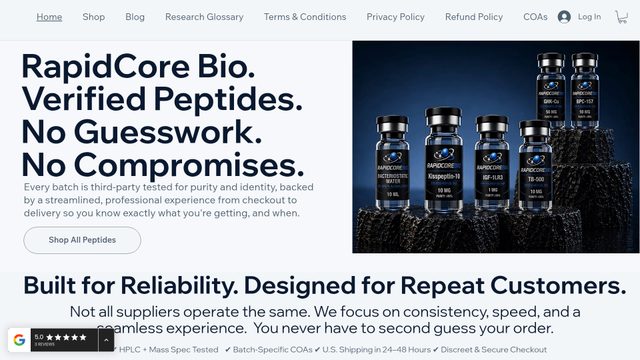
If you want to review verified inventory, our Research Peptides category is a practical starting point, alongside Performance Peptides and Therapeutic Peptides for labs building out a broader research catalog. Our COA verification page is the fastest way to pull a batch’s documentation directly.
FAQ
What counts as a complete chain of custody for a peptide lot?
A complete chain links the product specification, the executed batch record, the COA with its underlying raw data, and the shipment’s temperature log and signed receiving confirmation. A gap in any one of those documents breaks the traceability of the lot even if the others look complete.
Why isn’t a Certificate of Analysis enough on its own?
A COA is a results summary, not proof of the testing behind it. Auditors expect chromatograms, integration tables, system suitability results, and instrument calibration records to back up what the COA states, per ICH Q7 guidance on traceable documentation.
How should peptides be stored to preserve chain of custody integrity?
Store lyophilized peptides in a static mechanical freezer at or below -20°C rather than a frost-free unit, since automatic defrost cycles create temperature swings, according to NIBSC storage guidance. Allow sealed vials to reach room temperature before opening to prevent condensation, and minimize freeze-thaw cycles once reconstituted.
What should trigger a shipment quarantine?
Quarantine a shipment when labels or quantities don’t reconcile with the manifest, when a temperature logger shows an unexplained excursion with no supporting justification, or when packaging seals appear broken on arrival. Document the discrepancy immediately and notify the responsible quality contact before the material enters active inventory.
Does RapidCoreBio publish raw analytical data alongside its COAs?
We publish batch-specific Certificates of Analysis backed by third-party testing on our COA verification page, and we support requests for the underlying raw data as part of independent verification. All products are sold strictly as research compounds, not for human or animal consumption.
Sources
USP GC <1079> — Risks and mitigation strategies for storage and transportation
Peptide chain of custody: records & data standards — MolChanges
Recommended